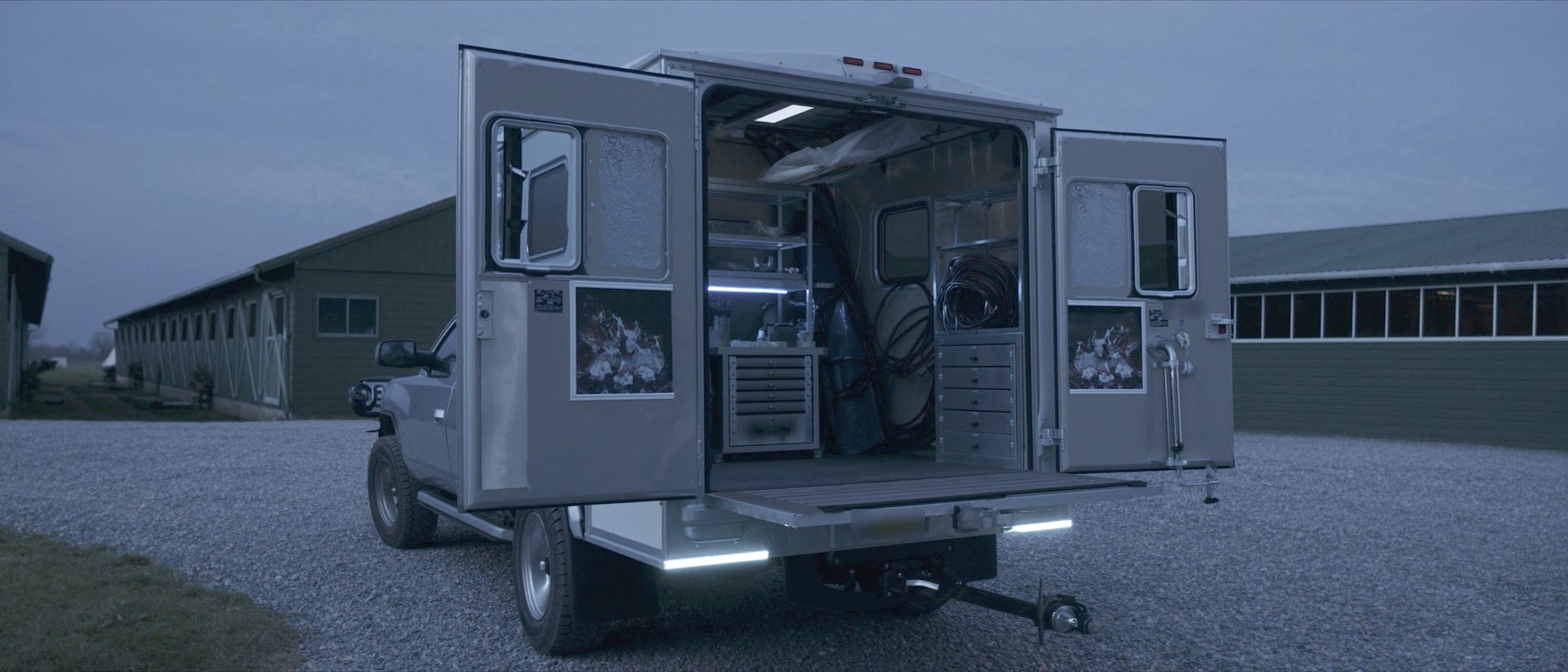
Ambulatory surgical unit 01 · Clay, Clinton, Platte and Ray counties
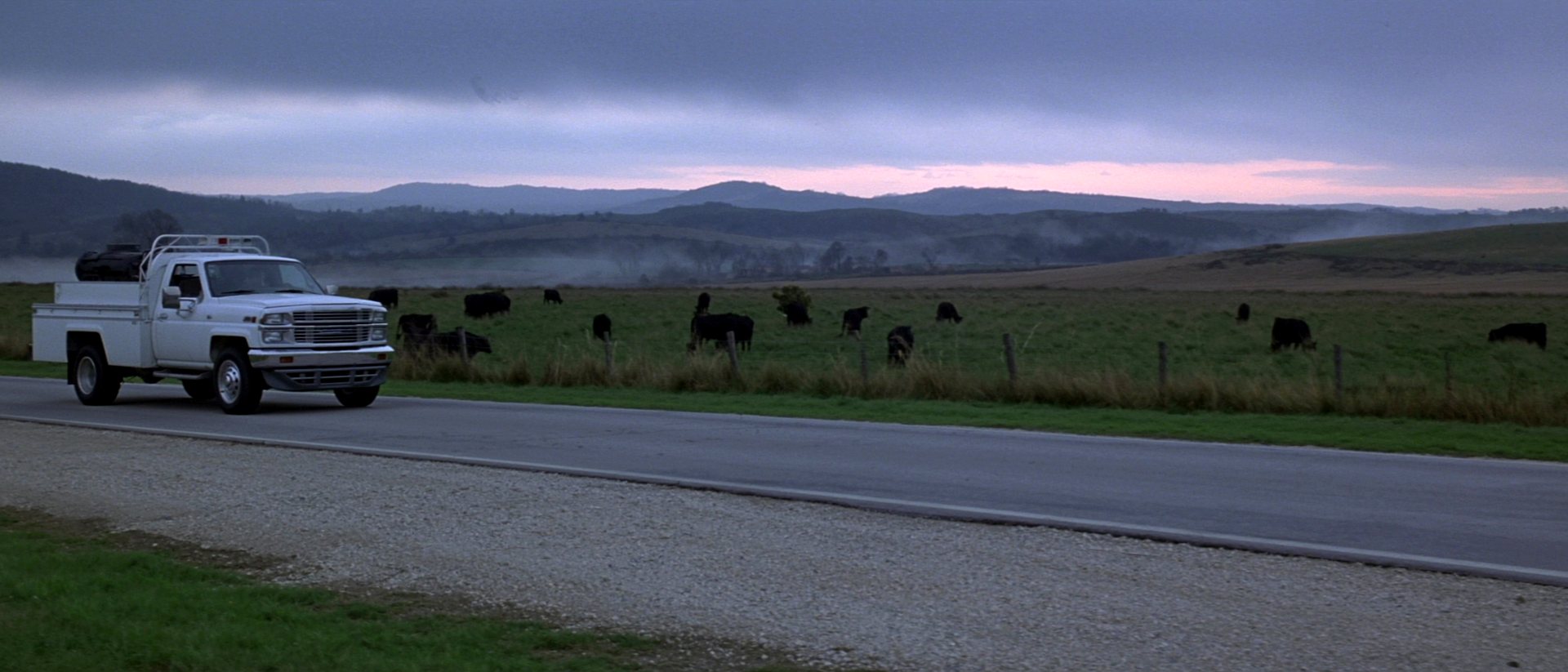
The theatre arrives by road.
A referral practice for horses and cattle that does its work in the client's barn aisle. One vehicle, four compartments, and a written boundary at the point where a barn aisle stops being the right room. Everything below describes what is carried and what is not.
- 41minMedian dispatch to on-farm, measured across the 214 farm calls in the illustrative log for this mockup.
- 62miRoad radius from the yard. Past it a case is referred rather than driven, because arrival time stops being defensible.
- 1,400lbRated working load of the hydraulic stocks carried on the unit. Above it the patient is not worked standing in the field.
- 6.5kWContinuous inverter output on the unit, sized to run the radiograph generator, the ultrasound and suction at the same time.
Compartment index
One vehicle, opened four times.
A referring veterinarian asks one question first, and it is never about philosophy. It is: what can you do at my barn without hauling the horse. The honest answer is a list of what is bolted into the truck, and the shorter, more useful list of what is not. This page is that inventory, compartment by compartment, followed by the cases that leave in a trailer.
- 01Imaging bayDirect radiography, two ultrasound probes, a video endoscope. Reads a distal limb in a barn aisle and stops well short of an adult thorax.Nearside, forward
- 02Standing restraintHydraulic stocks, head stand, padded bars. Everything that can be done to a sedated horse on its feet happens here.Roof rack + tailgate
- 03Sterile packsWrapped instrument packs, cycle-logged, with the autoclave back at the yard rather than on the unit.Offside, sealed
- 04Anaesthesia and monitoringSedation, local and regional blocks, and a five-channel monitor. No inhalational circuit, for the reason set out under Limits.Cab-side, locked
Compartment contents, capacities and positions on this page are invented for a design mockup. Nothing here describes a real vehicle, a real inventory, or a real practice's capability.
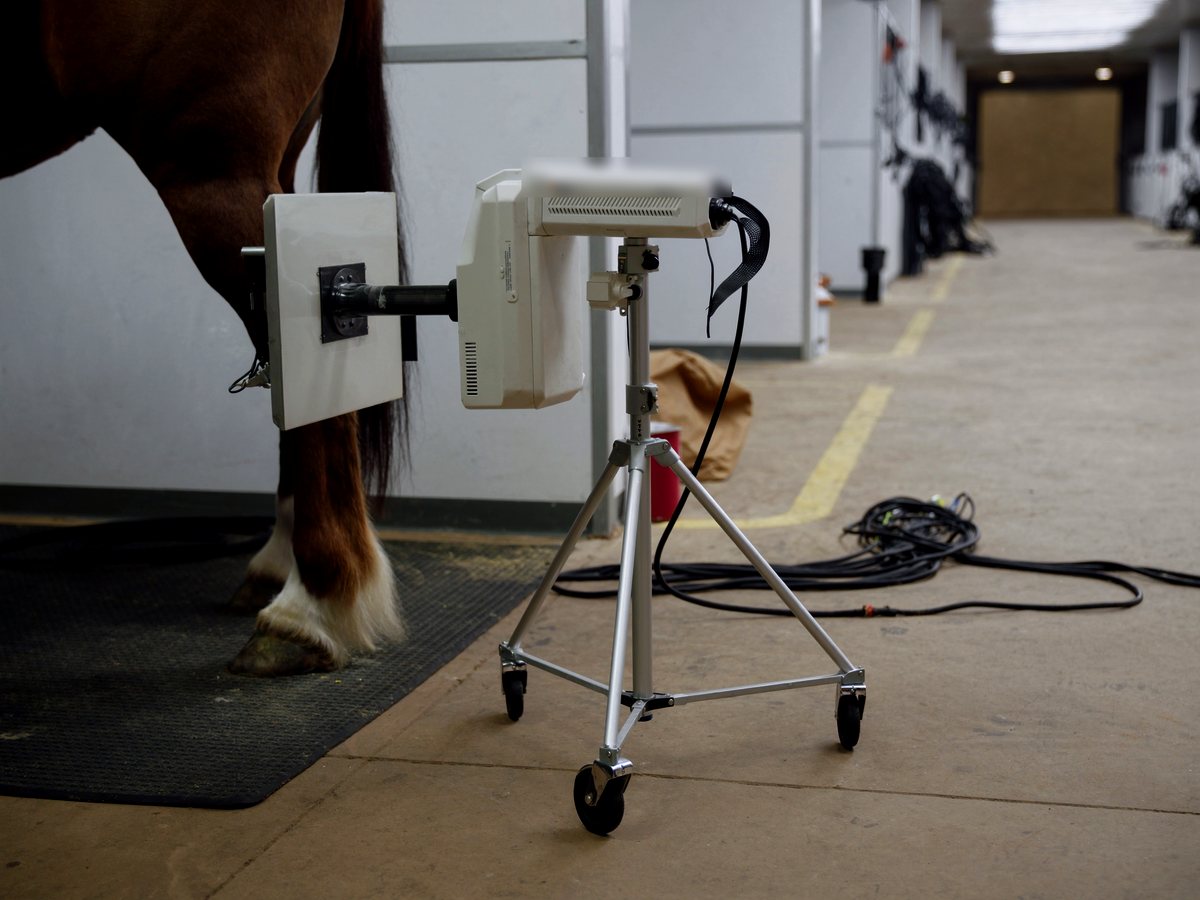
Compartment 01
Imaging in a barn is a power problem.
A hospital machine puts enough energy through a horse to see a pelvis. A unit running off an inverter does not, and pretending otherwise is how a referring vet gets a grey film and a wasted afternoon. The table below is written from the far end: what each instrument on the unit actually resolves at the end of a driveway, and the point at which it stops.
| Instrument | Reads in the field | Stops at |
|---|---|---|
| Direct radiography 30–100 kV portable | Distal limb, fetlock, carpus, hock, stifle in a light horse, head and sinuses. | Adult thorax and pelvis. Not enough output. Referred. |
| Linear ultrasound 5–13 MHz | Flexor tendons, suspensory branches, joint effusion, reproductive tract. | Anything deeper than about 14 cm. |
| Curvilinear ultrasound 2–5 MHz | Abdomen, thorax, pregnancy diagnosis in mares and cows. | Fine detail below roughly 20 cm. |
| Video endoscope 1.6 m × 9 mm | Upper airway, guttural pouch, oesophagus, bladder. | Adult stomach. Needs a 3 m scope, not carried. |
Every instrument, wavelength, kilovoltage and depth figure above is a placeholder written for this mockup. None of it describes any real equipment or any real practice's imaging capability.
Compartment 02
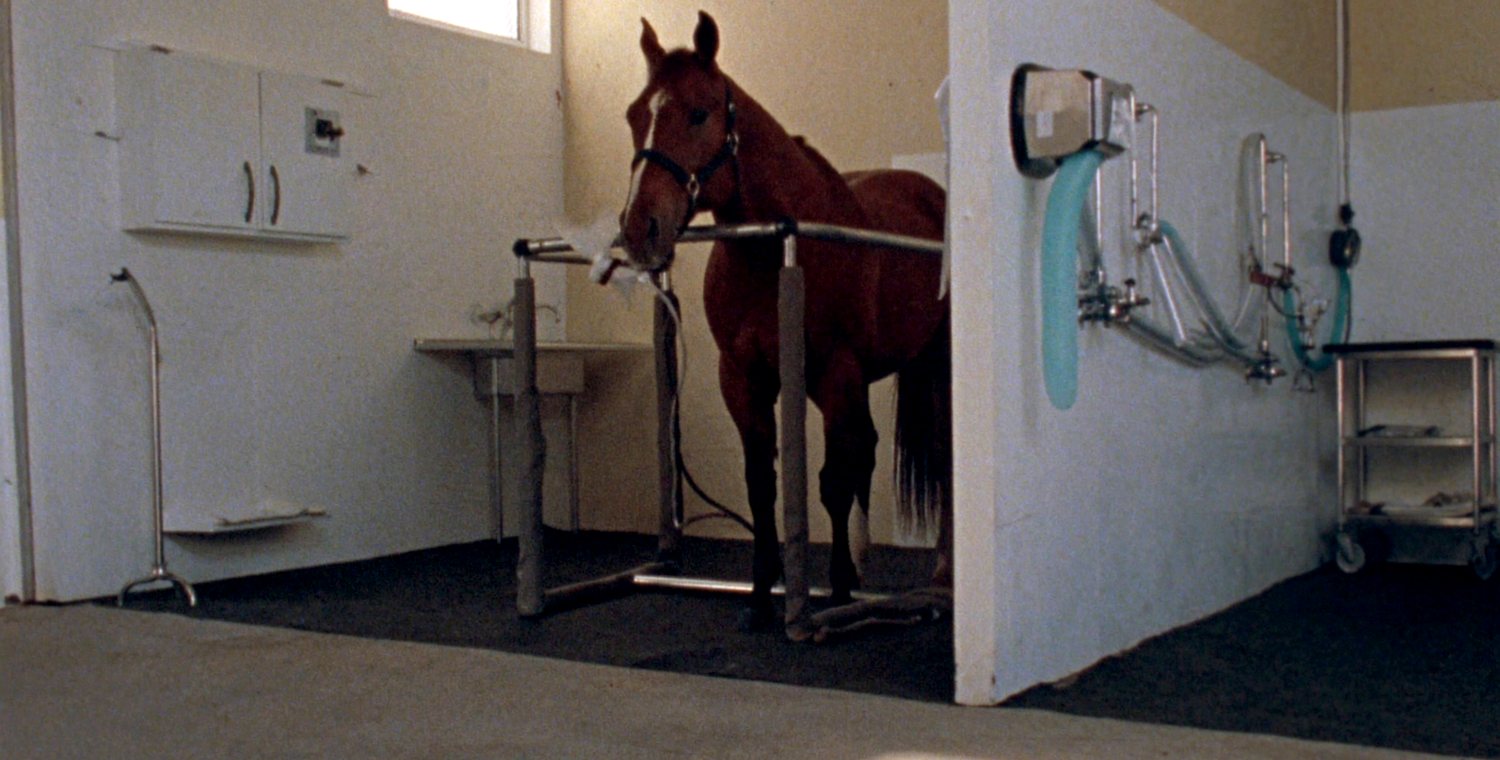
A horse on its feet is a different operation entirely.
Standing surgery is not a lesser version of the hospital procedure. It is a separate discipline with its own limits, and the limit is almost always time: how long a sedated horse holds still, how long a local block lasts, and how long a surgeon can work at chest height with a two-handed grip. The log below sorts the field list by that clock.
| Procedure | Restraint | Standing time | Field |
|---|---|---|---|
| Castration, standing | Stocks, sedation and local infiltration | 25–40 min | Yes |
| Distal limb laceration repair | Stocks or wall, perineural block | 30–60 min | Yes, once synovial involvement is ruled out |
| Sinus trephination | Stocks, sedation and local | 40–70 min | Yes |
| Enucleation | Stocks, sedation and retrobulbar block | 60–90 min | Yes |
| Caesarean section, bovine | Chute, paravertebral block | 45–75 min | Yes |
| Left displaced abomasum, bovine | Chute, line block | 35–60 min | Yes |
| Exploratory coeliotomy, equine | Requires general anaesthesia | — | No. Referred. |
| Long bone fracture repair | Requires general anaesthesia | — | No. Splinted and referred. |
Illustration only. These durations, restraint methods and yes-or-no calls are invented for a design mockup. No procedure should be planned, refused, or expected on the basis of anything in this table. Ask your own veterinarian.
Compartment 03
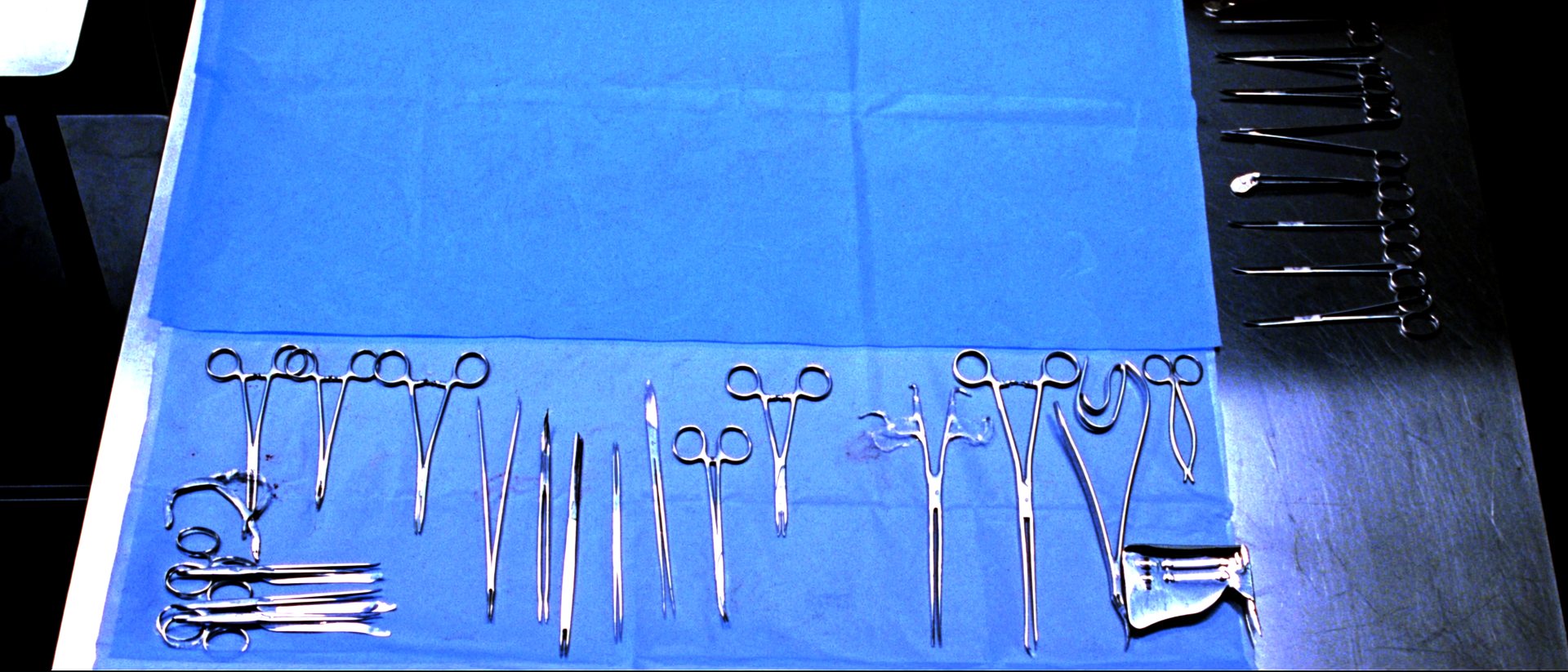
Sterility is a paper trail, not a feeling.
A pack is sterile because a cycle ran, an integrator turned, and somebody wrote it down. The unit carries wrapped packs and carries no autoclave: the sterilising happens at the yard, where the cycle can be logged and a weekly biological indicator can actually be incubated. A pack that cannot be traced to a cycle number does not leave the building.
- P-01Field general packThirty-one instruments. Double muslin wrap, class 5 integrator inside the fold.121 °C / 30 min, gravity
- P-02Castration packNine instruments and one emasculator. Peel pouch, single use per call.134 °C / 4 min, pre-vacuum
- P-03Laceration and closure packSeventeen instruments, suture drawn separately at the point of use.121 °C / 30 min, gravity
- P-04Ophthalmic packFourteen fine instruments, wrapped and handled apart from the general packs.134 °C / 4 min, pre-vacuum
- P-05Bovine obstetric and caesarean packTwenty-two instruments plus obstetric chains, kept as a dedicated pack rather than assembled on arrival.121 °C / 30 min, gravity
Pack contents, instrument counts and sterilisation cycles above are placeholders invented for this mockup. They are not a sterilisation protocol and must not be used as one.
Compartment 04
Five channels, watched by one person.
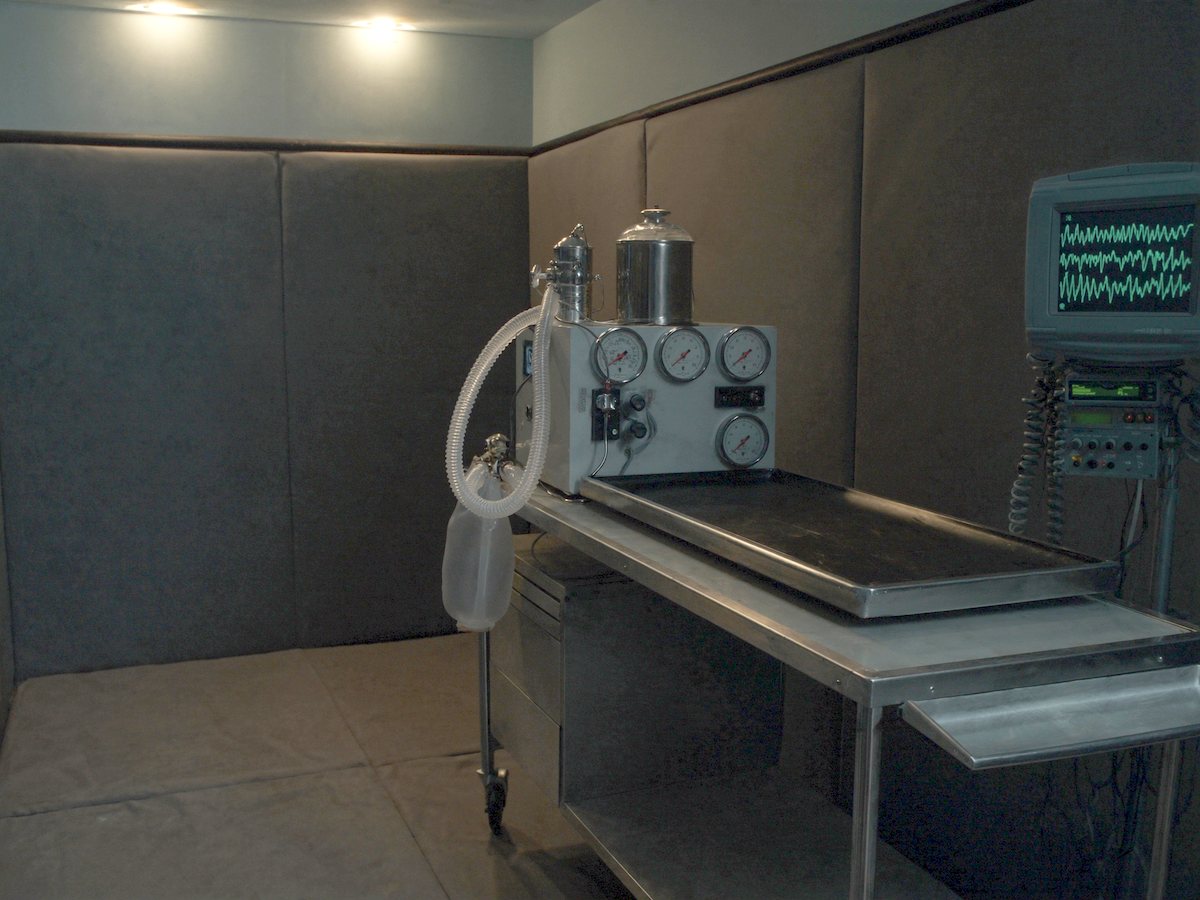
Field sedation is monitored, not assumed. The unit carries a five-channel monitor and one set of eyes, which is the real constraint: a channel is only worth carrying if a drift in it changes what happens next. The trace below is an illustration of that record, not a recording of one.
- ECG lead II36bpmIllustrative alarm band 26 to 48
- Mean arterial84mmHgIllustrative alarm band below 70
- End-tidal CO₂44mmHgIllustrative alarm band 35 to 60
- Core temp37.4°CIllustrative alarm band below 36.0
Why each channel is carried
| Channel | Sampled | A drift here means |
|---|---|---|
| ECG, lead II | Continuous | Rhythm, and the first warning that sedation is deepening faster than intended. |
| Mean arterial pressure | Every 5 s | Perfusion. The number that decides whether the procedure continues. |
| End-tidal CO₂ | Breath by breath | Ventilation, and in a standing horse the earliest sign of a slumped airway. |
| Peripheral oxygen saturation | Continuous | Oxygenation, read with suspicion because a pigmented lip reads poorly. |
| Core temperature | Every 5 min | Heat loss in a barn in February, which is faster than anyone expects. |
No drug, dose, dosing table, concentration or drug schedule appears anywhere on this page, and none will. Every alarm band, interval and reading above is an invented placeholder for a design mockup. It is not veterinary guidance, not a monitoring protocol, and not a basis for any decision about any animal.
The boundary
What does not happen in a barn aisle.
This is the shortest section on the page and the one that decides whether the rest of it is worth reading. A field practice that will not say where it stops is a field practice that will find out in front of a client.
- →Anything requiring recovery from general anaesthesiaA barn aisle has no padded recovery stall. A horse standing up badly on concrete is the single worst outcome available on any given day, and it is entirely avoidable by not starting.Referral hospital
- →Surgical colicSplinted, decompressed where indicated, and moved. The unit's job here is the first forty minutes and the phone call ahead.Referral hospital
- →Long bone and articular fracturesStabilised in a Kimzey or a Robert Jones by grade, then hauled. Nothing definitive is attempted at the farm.Referral hospital
- →Arthroscopy and any joint entered electivelyA barn is not a theatre and no amount of drape makes it one.Referral hospital
- →Thoracic and pelvic imaging in an adultThe unit cannot make the exposure. See Compartment 01.Referral hospital
The referral boundary above is invented for a design mockup and does not describe the scope, capability or judgement of any real veterinary practice.
Response
The radius is drawn in road miles.
Straight-line distance is a real estate measurement. What matters to a horse in a stall at six in the morning is gravel, a low-water crossing, and how many gates there are between the county road and the barn. The table is ordered by drive time from the yard, not by distance.
| Town | Road miles | Median arrival | Band |
|---|---|---|---|
| Kearney | 0–4 | 12 min | Scheduled and urgent |
| Holt | 8 | 19 min | Scheduled and urgent |
| Excelsior Springs | 13 | 26 min | Scheduled and urgent |
| Liberty | 14 | 27 min | Scheduled and urgent |
| Smithville | 16 | 30 min | Scheduled and urgent |
| Lathrop | 18 | 32 min | Scheduled and urgent |
| Trimble | 20 | 33 min | Scheduled and urgent |
| Plattsburg | 26 | 41 min | Scheduled |
| Richmond | 28 | 45 min | Scheduled |
| Platte City | 30 | 47 min | Scheduled |
| Cameron | 34 | 52 min | Scheduled |
| Beyond 62 road miles | — | — | Not covered. Referred to a nearer practice. |
After hours
Stated plainly, because a page like this one should: this mockup practice provides no after-hours emergency response. The illustrative line runs Monday to Friday, 7:00 to 18:00, and Saturday 7:00 to 12:00. Outside those hours a caller reaches a recording that names a referral hospital and nothing else. If a real animal is in trouble right now, call your own veterinarian or your nearest emergency veterinary hospital. Do not call any number on this page.
Distances, arrival times, coverage bands and hours above are placeholders written for a design mockup. They are not a service commitment and no real practice keeps them.
Referrals
A referral starts with a phone call, not a form.
On a real practice's page this is where a referring veterinarian would find the direct line, the fax that radiographs actually arrive on, and the hours the truck is loaded. Every line below is a placeholder written for a mockup.
- Referral line
- (816) 555-0142Placeholder number. Not connected to anything.
- referrals@example.comPlaceholder address at a reserved example domain.
- Yard
- 123 Main Street, Kearney, Missouri 64060Placeholder address. Do not drive to it.
- Loading hours
- Monday to Friday 7:00–18:00, Saturday 7:00–12:00Placeholder hours. No after-hours emergency response.
- Illustrative call-out fee
- $95 within 20 road miles, $2.40 per mile beyondPlaceholder pricing invented for this mockup. Not a quote, not a rate, not a fee any practice charges.
- Licensing questions
- Missouri Veterinary Medical BoardThe state board is where licence status is actually verified. Nobody described on this page is licensed anywhere.